“People Are the Experts of Their Own Lives”: A Conversation with Hannah Kashman
In our series where we talk with inspirational people changing the world one step at a time, today we speak with Hannah Kashman, the inspirational force behind the development of The Nest, the London Borough of Southwark’s first open-access mental health service for young people aged 0–25.
With 8 years of experience delivering and scaling impactful youth and community programmes, Hannah is currently the Head of Community Programmes at The Abbey Centre, a charity established in 1948 to support the communities of south Westminster, where she is passionate about creating environments where everyone can have their voices heard.
Armed with a positivity that belies the emotional complexity she faces daily - the kind most of us can barely imagine (she politely asked to pause our conversation to take a safe-guarding call), read on to learn more about her incredible story, her theory around lasting change (something a lot of overpaid management consultants could learn a thing or two about) and the future that she hopes to build.
You’ve spent your entire career in youth, community and mental health settings. What originally pulled you into this work?
HK: I started volunteering with young people when I was a young person myself. I did a youth leadership course at my local community centre, and when I was about 14 or 15, my friends and I would run little Mini MasterChef classes for kids in reception. It wasn’t profound, mostly stopping them from eating raw cupcake batter, but I remember having so much fun. I realised it was a space where I could come into my own.
When young people are given space to lead, be creative, and be playful, which we lose as we get older, it’s magic. I kept volunteering throughout my teens. While my peers got paid work, my parents gave me a bit of money so I could keep volunteering. Even at uni, I spent my summers on camps and programmes.
My first job ended up being with the youth organisation I’d volunteered with. It was meant to be a pit stop; everyone else went off to law conversions or the civil service. But at the end of that year, I realised: no, this is actually what I want to do. I still felt the same way I felt when I was 15, except now I was the one supporting younger people to step into leadership opportunities.
So I guess it’s the magic that happens when you create space for people to be heard, to really find their voice. It’s amazing. I’ve never tired of it, and I realised I wanted to keep doing it.
You’ve spoken about environments where “everyone can thrive and be heard.” Was there a moment in your own life when it became non-negotiable?
HK: There’s a general feeling and then one very specific moment.
The general feeling is realising you never know everything, and that you shouldn’t pretend to. Early in your career you’re told you need to have all the answers. But when you’re a youth worker or facilitator, you have to disregard that. The work is collaborative. You have just as much to learn as you have to give.
When you de-centre yourself from being the “Leader” with a capital L and flatten the hierarchy, young people say the most fantastic, insightful things. You think: why can’t everyone else get it like this?
And then there was one defining moment. I spent a year working in schools in Newham with young people at risk of not being in education, employment or training. There was one group I remember so clearly, young Bangladeshi and Pakistani Muslim boys in a predominantly Black Catholic school. The school was really worried about them.
They were referred to the programme I was running. At first they were disengaged, but the programme had a competitive element, and by the end, they took it incredibly seriously. They had to present at London City Hall. Seeing them walk into that space and realise they belonged there, that they could take centre stage, that was incredible. That was a big moment for me.
Your work has evolved from supporting young people at The Nest to serving whole families and adult communities at The Abbey Centre. You have the rare perspective of seeing both the experiences of youth and the adults who care for them. How has this shaped your understanding of people, resilience, and what communities really need?
HK: The big thing that unites everyone is the need to be heard. That never changes, whether you’re 14 or 40.
Sometimes it feels easier with young people because distrust of services isn’t baked in yet, though trauma can hardwire that very early. With adults, everything becomes interlinked. It’s like a snowball: bad housing affects mental health, mental health affects work, work affects housing, and it goes round in circles. Adults can fall beneath the radar in a way that’s harder with young people.
There’s also massive tech poverty. We assume the world is moving forward, but many people are being left behind, not just older people. Plenty of people in their 40s and 50s don’t have Wi-Fi or can’t afford data. Some of our CHWWs (Community Health & Wellbeing Workers) only got Wi-Fi because of their job. For me it’s like: how do you exist without Wi-Fi? But for many, it’s a luxury.
On the youth side, all their homework is online. What do you do if you don’t have a device? Or if there are seven kids and one laptop? It’s entrenching inequality.
Seeing both sides, young people trying to grow and adults trying to survive, makes it clear how structural this all is. The needs are the same: to be heard, supported, and given a fair chance. The barriers just look different.
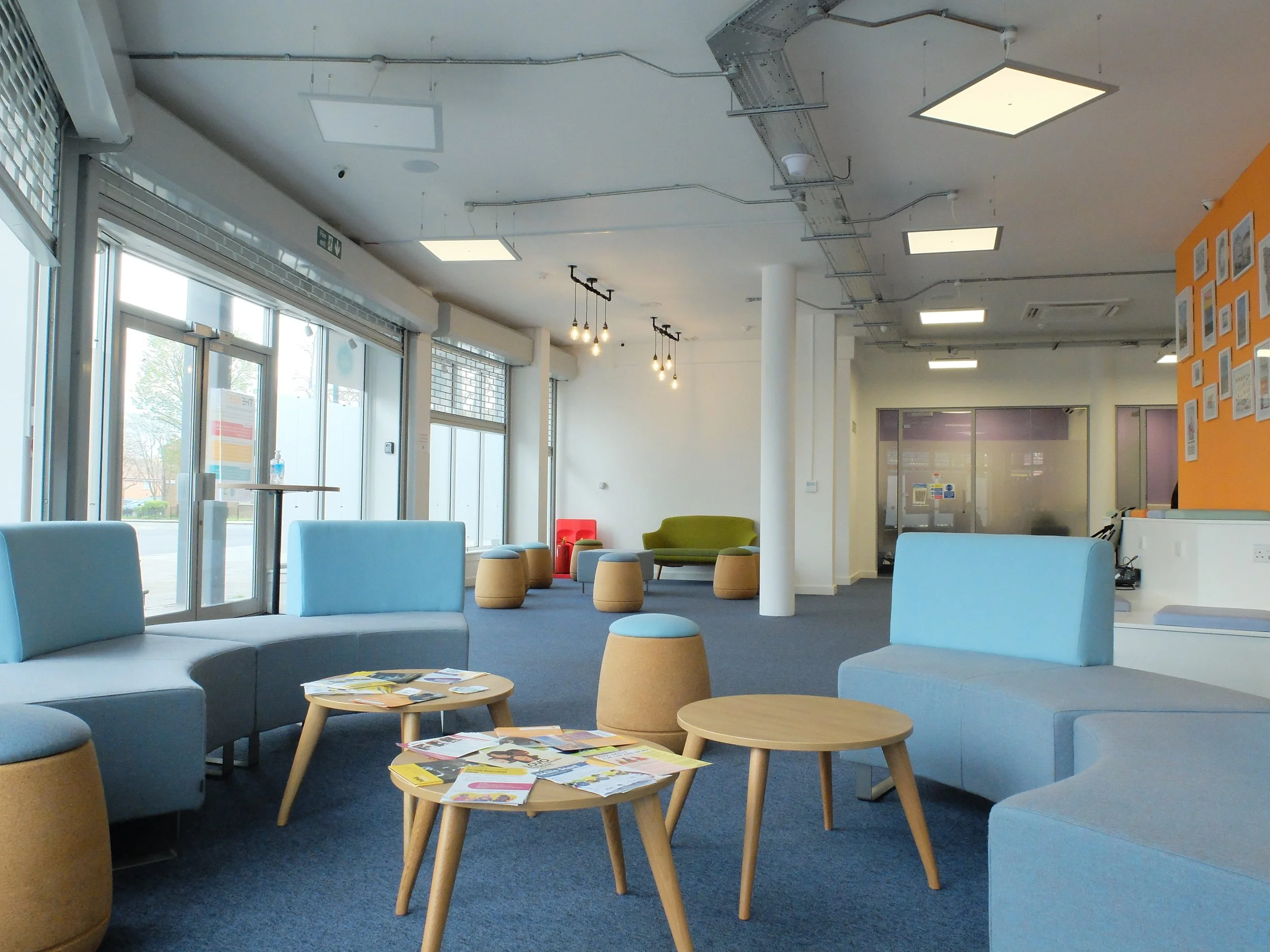
The Nest | Mental Wellbeing Support in Southwark
Across youth work and community support, so much of the burden falls on “the carers.” What have you learned about the cost of caring?
HK: It’s so difficult to leave your work at work when you’re in a caring profession. Safeguarding concerns don’t happen often, but when they do, they stay with you.
During COVID I was working from the corner of my bedroom, and it always happened last thing on a Friday. A manager would call saying, “I’ve got a safeguarding concern,” and I’d think: I was about to log off. That corner honestly felt cursed. Those concerns are bleak and really upsetting. It was so hard not to carry them through the weekend.
And I know that’s exactly what our CHWWs go through. Assia, who runs our Information, Advice and Support Service, has people coming to her saying, “I cannot pay my bills. Help me.” And she can’t. It’s horrible on so many levels, as a professional and as a human being.
That’s why supervision is essential. Therapists have supervision; our CHWWs do too. I’m always available when safeguarding concerns come up to provide support and talk through difficult cases.
Particularly for women, or anyone socialised as female, the expectation to care exists at home as well as at work. It’s a really heavy load.
When we first met, one of the things that stood out was how warm and positive you are, even though you deal with emotional realities most people never see. What helps you keep showing up?
HK: The work is heavy. Really heavy. And the only way I stay afloat is by bringing playfulness into the spaces I’m in. I’m naturally silly, I love making people laugh, breaking tension before it builds. When you’re surrounded by trauma and instability, creating moments of joy becomes an act of resilience.
I’m aware of my own privilege. I’m a white, able-bodied, cis woman. My cup starts full, or fuller than many of the people I support. Because of that, I feel a responsibility to pour into places where the need is greatest.
At one of my old jobs, Fridays were quieter and we had club-level speakers in the ceiling. I created the Feel-Good Friday Tune Championship. Everyone had to pick one song and we’d blast them. It sounds silly, but those tiny rituals gave people space to breathe. They reminded us we were human.
I know I can bring that kind of lightness into difficult environments, and because I know it helps, I don’t plan on stopping.
What are the biggest misconceptions people have about the communities you serve?
HK: The biggest misconception is that outsiders know what a community needs better than the community itself. People make assumptions so quickly.
But the truth is simple: people are the experts of their own experiences.
Communities already hold the answers to their own problems. Our job isn’t to prescribe solutions; it’s to listen, make space, and give people the tools or resources they’re asking for, whether that’s training, a small grant, or a seat at the table.
Real change has to come from the bottom up, not the top down.
At The Abbey Centre, now that I’ve spent nearly a year building the foundations of the community team, the next step is making sure services are genuinely built with the people who use them. Not for them, with them.
People usually know what they need. The hard part is access.
And finally, as you expand The Abbey Centre’s reach, what future do you hope to build, and why does it matter to you personally?
HK: The future I want is one where the community isn’t just consulted, they’re leading. Surveys can only go so far. I want a proper community steering group: residents we’re accountable to, who shape our decisions and tell us what’s really needed.
My dream is to secure funding to train south Westminster residents as community researchers. They’d identify challenges with their peers and shape solutions, and we, as one of the larger charities locally, would use our infrastructure to make those solutions possible.
That’s what community work should be: people defining their own future, and organisations using their power to back them.
It matters to me because in nearly eight years of this work, I’ve seen the shift. When I started, genuine collaboration wasn’t treated as essential. Now it’s clear: if you’re not working with the community at every step, you’re not doing the job.
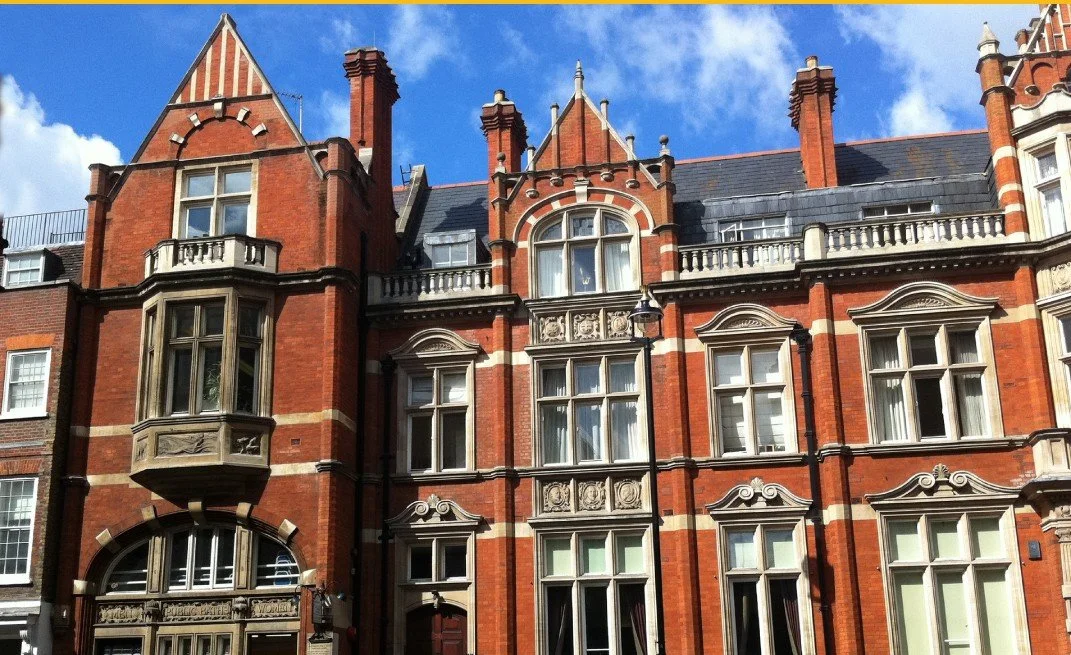
The Abbey Centre, London
Hannah's LinkedIn: https://www.linkedin.com/in/hannah-kashman-a4318a172/
Get involved with The Abbey Centre: https://www.theabbeycentre.org.uk/
Author: Gaurav Sood, Co-founder, Circe
